2/11/25, Doug on dismantling
A short messenger chat re moving cab, and then Doug’s text on dismantling
2/10, Jeannine: Actually y'all, we are obligated to deconstruct it the way Doug described because of its being on the historic register, and if there were no other reasons to do it that way one of the big ones is that if we don't it can keep us from getting grant $. Being on the historic register qualifies us for more grants, Mitch found one that's a pretty high award and we had talked about using it for a roof. It's biennial though and we pretty much missed it this year but it's there.
I have other questions if anyone wants to chime in. Scott, will the fence be in the way to move/replace the cab? Andrew said 6 to 8 people to move it, is that about right? Also, re time frame, which affects a place to put it, Andrew was saying weekends, but a fair amount of people who might be able to work could be able to work on weekdays so that would speed things up And finally just a mention, we would not be able to work on site on Saturdays once market is open. Anyway--back to the salt mines (grant writing)
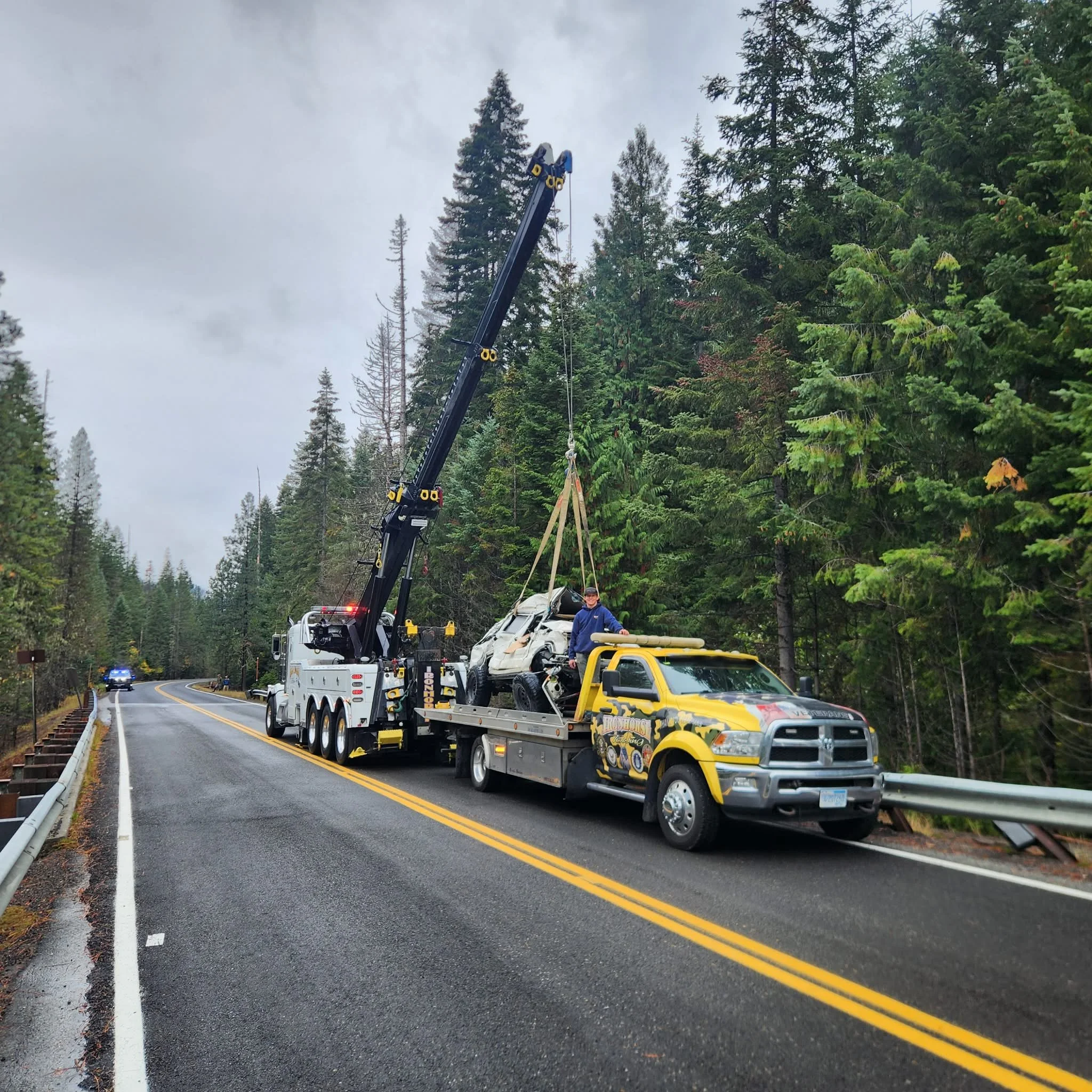
We are all jealous of your truck, Scott
Scott: I don't need anything moved to pick that off there and set it on my truck. On site I really only need the cab unbolted. The crane is remote so I can handle the rigging myself. Of course if others want to join in the help is always appreciated. I do need a firm measurement on the width so I can plan the haul truck and rigging. Something like in the picture.
2/11, Text from Doug Shearer:
First I want to clarify my position. I have been involved in the museum in Toppenish from its beginning but am not the leader of the 1364 project, only the cab portion of it. Karl Hammerstrom began the 1364 cab rebuild about 30 years ago while I was working full time as a small town family MD who had a hobby of wood working. I was able to observe Karl intermittently while he completed the basic side structure but little else before he had health problems which precluded further work by him. Another museum volunteer and I took on the cab rebuild while others with more mechanical experience worked on the rest of the locomotive.
We had one sheet of cab blueprints and what was left of the cab as in the following picture.
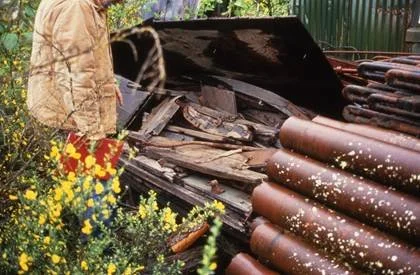
The cab had been dismantled in 1974 and ended up on the ground at the Mt Rainier Scenic Railroad where we found it. There was not one piece of reusable lumber. Nonetheless, we took every piece of wood home and with blueprint assistance we were able to lay it out in appropriate position for the front, back and side walls and roof. Many of these wood pieces had metal casting and fittings still attached, which was very helpful in giving details that were not clear from the blueprint we had. Our carpenter shop is in a 50’ boxcar adjacent to a fenced in loading dock where the cab was rebuilt. There was a large concrete slab close by so all original parts were saved until the corresponding structure was finished. In addition NP 1354 is about 60 miles away in Pasco and the local park official would give us access each time we needed it. I think this was very important as there were many things clarified when both the blueprint and original pieces could be studied. Railroad construction is different than the usual construction as the cab is designed so that it allows a lot of movement of the pieces. You will see this as you disassemble the cab. I would strongly recommend avoiding the dumpster and instead using the long reach forklift or a crane to lift it off intact. Once it is on the ground it can be safely disassembled so that the metal can be reused. Based on experience in restoring other wooden cars, I suspect you will have some reusable piece as yours have not been on the ground in a rainy area.
Original blueprints are at the Minnesota Historical Society. They are shorthanded and slow to respond. We are trying to get a copy of the lost S-4 blueprint and for a Q-3 cab for NP 2152 which is at our museum
Even though the 1356 cab has been “rebuilt” after the accident, I would bet it was built from the blueprints. All the s-4s had sheet metal over the bottom sides below the windows. From online photos and my recall from a visit a decade ago, the metal on 1356 is the norm. The engine number was painted onto that metal.
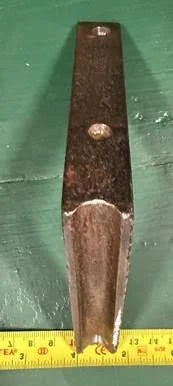
Michael bought up the issue of the window sill slider rails. These were half rounds extending the full length of the cab. This is an end view.
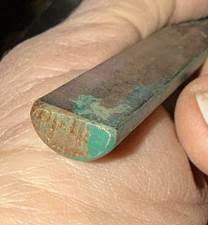
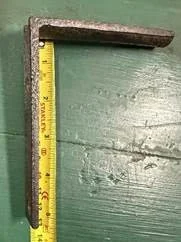
There is a bracket at the bottom corners of the window frame. We were missing several of them. One of our volunteers cut a section out of a piece of pipe and then welded a flat bar to the end. Once drilled for a countersunk screw they are almost indistinguishable from the originals.
Also in the email I got from Doug, about the roof—”You may not want to use a canvas over felt roof as on blueprint, but for any type of roof it is much easier and safer to install it while cab is sitting on the ground. You will note the bare cab in the picture I sent. That was the first test fit. We had the convenience of a crane and we lifted it on and off several times. It was finished when we lifted it the last time.”